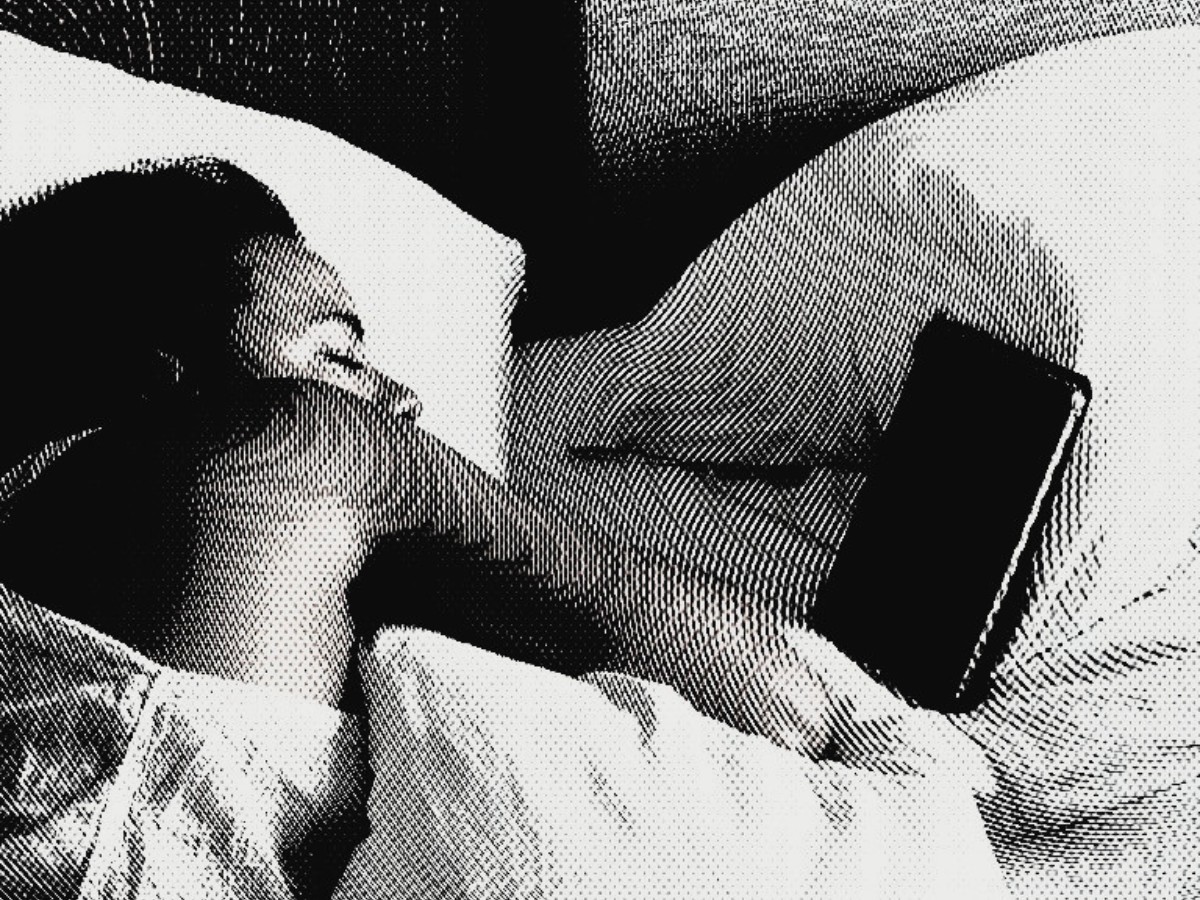
How Self-Talk Shapes Your Life
The voice in your head isn’t harmless—it decides what you risk, create, and believe you’re allowed to want.

The Invite is a new sex comedy drama about a couple in their early 40s who invite their upstairs neighbors over for dinner. I won’t say more, so I don’t spoil it, but it is worth a watch.
Anyway, there’s a scene in the movie that I haven’t been able to stop thinking about:
Hawk: Do you actually look in the mirror and not know how sexy you are?
Angela: Oh, blah! Yuck! No!
Hawk: Angela! You can’t be that out of touch with yourself, are you?
Angela: Oh, God. No. I know. I’m a stupid fu*king c*nt. I really, I …
Hawk: Whoa, Angela.
Angela: No, [don’t worry,] that’s just my inner monologue. That’s just the way I speak to myself.
(Tries to continue to convince Hawk, and herself, that her inner monologue is totally normal.)
Angela: It’s just the voice in my head. It’s not…No.. It’s [actually] goooood.
Hawk: Are you sure?
Angela: I’m good.

I haven't stopped thinking (or talking) about this scene because, yes, it really is like that. Like Angela, many people have an inner monologue that is cruel, but it feels familiar and casual… mostly because they’ve been hearing it for so long.
The truth is: a lot of these inner voices have history. They formed when you were younger. When you believed almost everything anyone suggested about you, from a kid at school who seemed mean (and was probably struggling at home) to a tired, unhealed parent.
Psychologists sometimes call these ‘negative self-schemas’: beliefs about ourselves that get formed through experience and then become the lens through which we interpret ourselves. Research has even found links between childhood verbal mistreatment and self-criticism later in life.
It usually starts with somebody else saying the cruel words to you or about you. Eventually, you learn to say them to yourself without anyone else needing to.
The danger is that these voices end up deciding what we risk, how we create, and what we believe we’re allowed to want.
I share this because if you can trace back where those words were first told to you (or spat at you), you might realize that not only do you not believe those things about yourself, but they are also unreasonable. You heard it once. Believed it. Internalized it. And now, as an adult, you carry it around as if it’s true.
When I was in grade school, I had a big, active imagination especially as a kid who grew up without parents and felt a deep loneliness. I remember listening to my classmates’ conversations and in an effort to join in, I’d share out loud whatever popped into my head during the conversation.
They’d laugh, look at each other, and in unison say, “Over the moooooon.” And laugh again.
What they were really telling each other was: “Here she goes again. Always going too far off from what we’re talking about. Always saying something that makes no sense.” But all it was… was a more imaginative way of understanding their conversation. A playful one.
This all felt like an attack on my imagination and creativity and while I hate to say it, it was something I carried with me well into my adult years and into my career as a corporate creative. The voice inside my head would say something like “don’t bother, that idea isn’t smart enough for this room” or “that’s not even what they’re talking about.” In the end, it would manifest as me not sharing ideas during brainstorms at work because they might just be too “over the mooooon.”
How the voice inside your head talks to you matters. That is the most intimate space you have, and it should feel safe, free, and open. Most importantly, non-judgmental.
So how we change this?
Here is a gentle practice for this week (and beyond)...
Before your thinking can change, awareness has to come first. This week, listen to your inner monologue as you go about your life.
- What does it sound like?
- When does it show up?
- Is it your voice or someone else’s voice from your past?
Then, when you feel ready, practice interrupting and correcting it.
- When you make a mistake and hear “you’re so stupid,” follow it with: “Oops. I made a mistake. But making mistakes is normal. I’m going to try again.”
- When you look in the mirror and hear “I hate my body,” follow it with: “This body is allowing me to live this life. Thank you, body.”
Remember that the goal is to stop treating these cruel and/or negative voices as truth or as an instruction.
In your head you can hear “they’re going to laugh at you” and decide to share the idea anyway. You can hear “Of course you messed it up. You mess everything up” and decide to try again anyway. You can hear “No one cares what you have to say” and keep going anyway.
The voice in your head is repeating what it’s learned over the years back to you. So teach it something useful, something that helps build you up. It doesn’t have to hold power over how you move through your life. That power belongs solely to you.
Sources: Gibb, B. E. (2002). “Childhood maltreatment and negative cognitive styles: A quantitative and qualitative review.” Clinical Psychology Review, 22(2), 223–246; Sachs-Ericsson, N., Verona, E., Joiner, T., & Preacher, K. J. (2006). “Parental verbal abuse and the mediating role of self-criticism in adult internalizing disorders.” Journal of Affective Disorders, 93, 71–78.