Give the Present Its Flowers
I'm living the life I used to daydream about, and I still catch myself asking what's next. On hedonic adaptation and staying present.
Think about something you once wanted really, really badly. You dreamed about it. You worked for it. You imagined how you'd feel when it finally happened. And then it does.
Except that almost immediately, you start thinking about something else you want really badly, and you start moving toward that.
Why do we make our biggest accomplishments feel so normal so fast?!
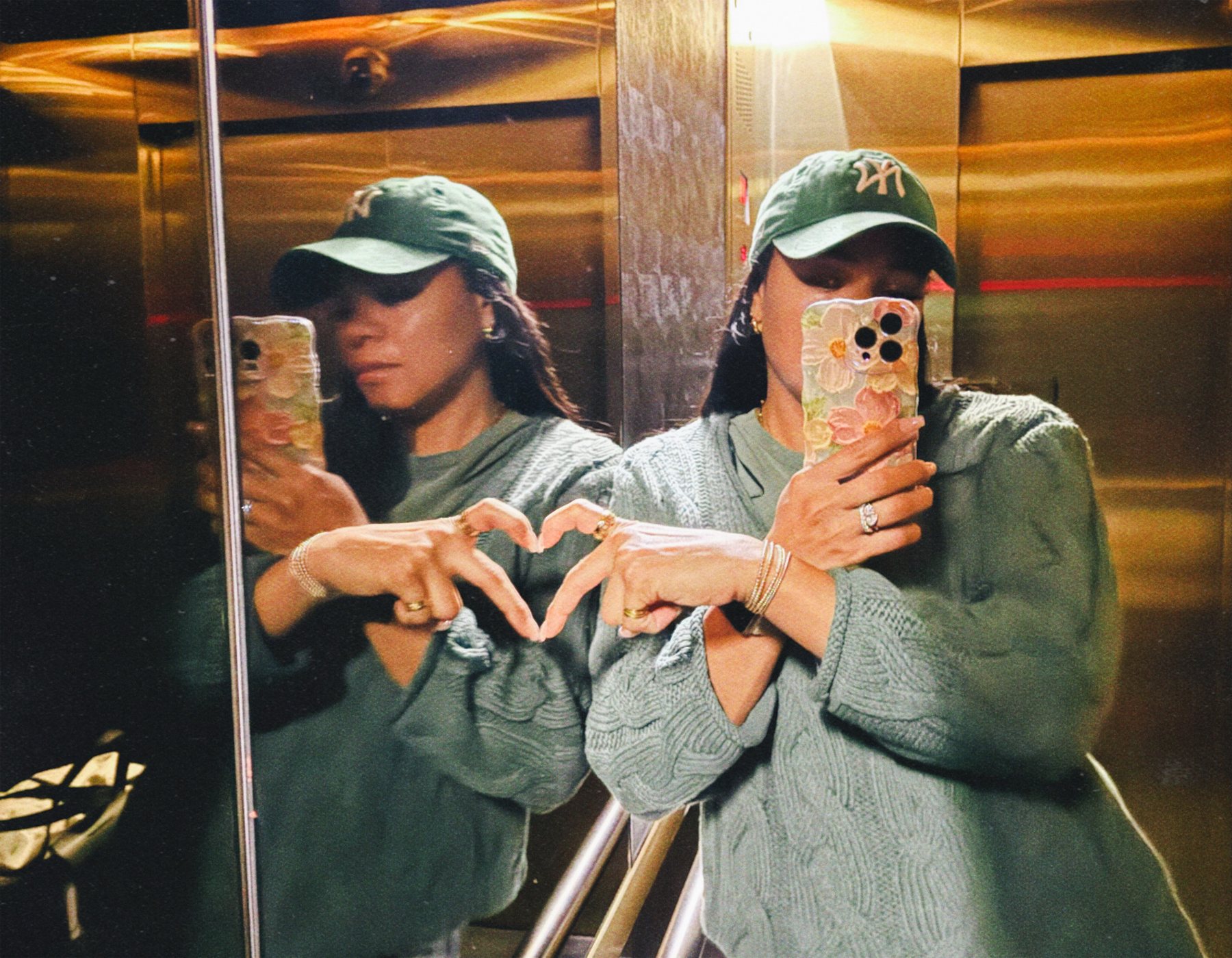
Two years ago I decided to leave my corporate job. Since then, I've been traveling the world full-time with my husband while growing my business as a life coach. Traveling for months on end was something I only saw in movies and read about in books. Never something that felt possible or available to me.
I got glimpses of it on vacations from work when I'd travel somewhere far for a few days before flying back to New York and going right back to my job. Those short trips were enough to know I wanted more of that travel life. I used to think, "What if I just buy a one-way ticket somewhere with no return?" Then last December, my husband and I set out to travel with no return date in sight.
While I am still in that "WOW I CAN'T BELIEVE MY DREAM LIFE IS NOW MY REAL LIFE" stage, I still find myself constantly thinking about what kinds of things I want next for my life and how to get there.
Where are we going to live when we're done traveling? How much bigger do I want to grow my business? What else do I want to accomplish before I'm 40? What's the next version of my life supposed to look like? And sometimes, embarrassingly: is this enough?
All of those questions, while I feel grateful to have them, absolutely remove me from the poolside daybed I'm sitting on and the breeze on my skin. They keep me from being present when my husband is telling me a story or sharing an idea. They keep me from enjoying the meal in front of me. Ultimately, they keep me from being in the very life I dreamed about.
Does this look familiar?
old goal: I just want my own apartment.
after reaching goal: I need a bigger apartment.
old goal: I just want clients.
after reaching goal: I need ten clients.
old goal: I just want to be with someone who loves me.
after reaching goal: When is he going to propose?
old goal: I just want to feel good in my body.
after reaching goal: I need to lose ten more pounds.
It's almost as if the version of us who sets the goal and the version of us who reaches it are two different people. The one who wanted it never gets to be there for it. The one who gets there has already started wanting something else.
Luckily, some of this has been studied and it actually has a name: hedonic adaptation.
Psychologists Kennon Sheldon and Sonja Lyubomirsky have studied what happens after something positive happens in our lives. Part of what they found is that as the positive feelings associated with a change begin to fade away, our aspirations can start to rise. We get the thing we wanted, then start wanting an even better version of that thing.
One way around this is to slow that process down. Researchers call it 'continued appreciation'. Basically, you have to keep noticing. And this takes practice. Feeling that sense of accomplishment is something we need to practice on purpose.
Why does it matter that you acknowledge that you are where you once wanted to be? Well, every time you stop and recognize that you're standing somewhere you once worked hard to get to, you're collecting evidence about yourself: I wanted this. I worked toward it. I got here. That evidence becomes self-trust. It reminds you that the next thing you want might be possible, too. And in the meantime, you actually get to enjoy the life you've already created.
There's one cool psychology experiment that I've personally been trying out. In a 2008 study, people who imagined how a positive event in their lives might never have happened actually felt more positively about it afterward. The researchers called it 'mental subtraction'.
Describing the good thing wasn't enough. The people who imagined what their lives would have been like if the good thing had never happened ended up feeling better than the people who simply wrote about the good thing itself. They had to imagine its absence to actually feel its presence.
So instead of asking yourself only, What am I grateful for? try asking: What would my life look like if this good thing had never happened?
What if I had never moved out of New York City? What if I had never left my corporate job? Just thinking about those alternate versions of my life makes the life I'm currently sitting in—on a plushy daybed at this hotel in Bali, with a coffee, a cool breeze, and my husband next to me—feel a little less ordinary. A little less shoulder shrug.
That doesn't mean we should stop wanting more. I hope I always want more for my life, and I hope you do too. But there's something about the present that deserves its flowers. Something about the life you're already living that deserves you.
Eventually, this version of your life will become a version you look back on. So before you rush off to improve it, upgrade it, or figure out what's next, ask yourself: What in my life today was once something I really, really wanted?
And stay there for a minute. There's nothing to fix and nothing to turn into another goal. Just an acknowledgment of where you are right now.
Get in the habit of giving the present its flowers while it's still the present.
Want to actually practice this? I turned this letter into five small practices: How to Stop Normalizing Your Dream Life.